
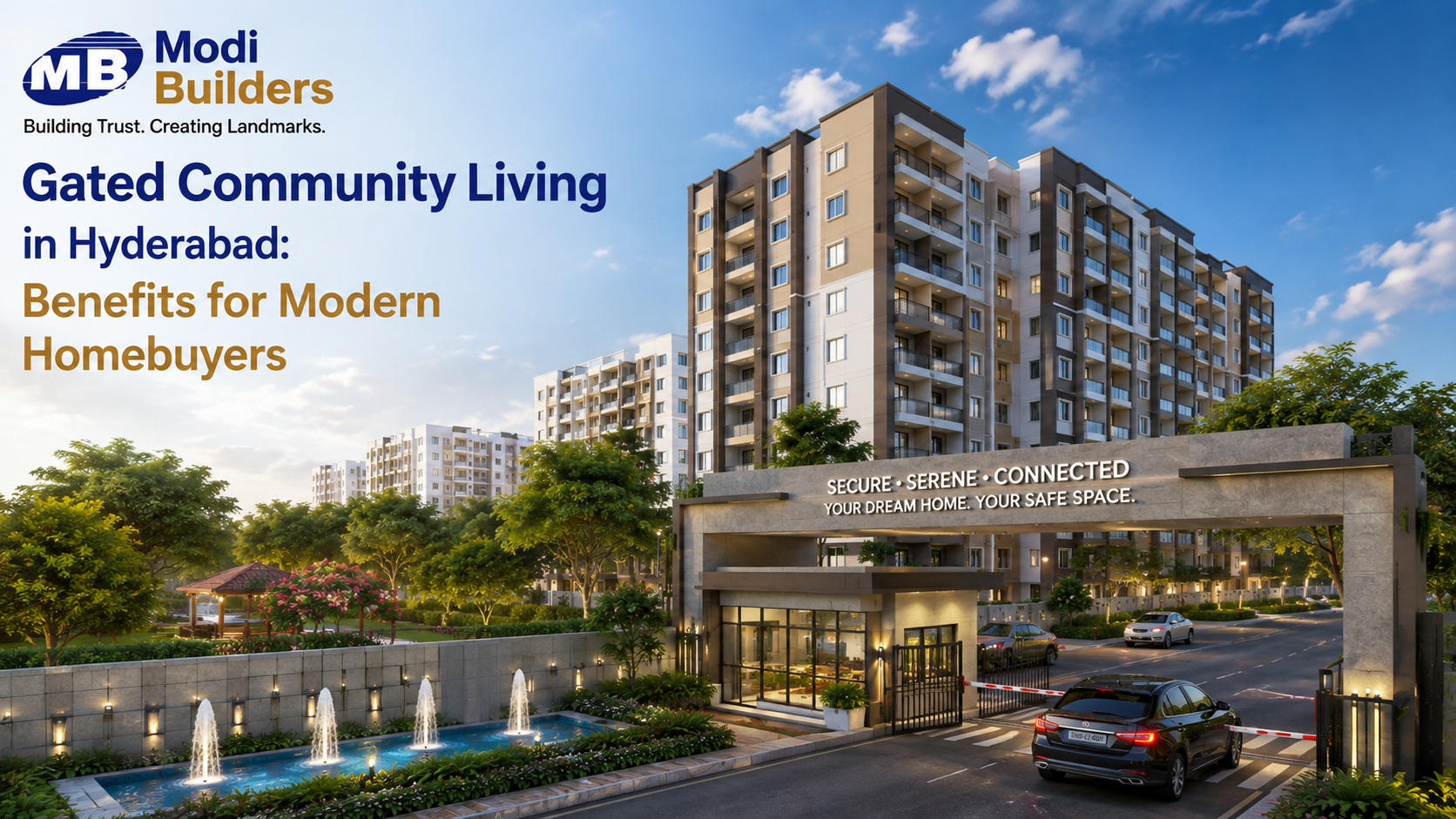

Something shifted in how people think about buying a home, and I don’t think it happened all at once. It crept up gradually somewhere between the pandemic rearranging everyone’s relationship with their living space and the general realization that an apartment is where you actually spend most of your life, not just where you sleep. People started caring about what surrounds the flat, not just what’s inside it.
In Hyderabad, that shift shows up clearly in what’s selling and what isn’t. Standalone apartment buildings with nothing but a lobby and a watchman? Harder sell. Gated communities with actual infrastructure parks, gyms, play areas, walking tracks consistently moving inventory. That’s not a coincidence.
Why Security Became Non-Negotiable
I’ll be honest: security features weren’t always a primary buying criterion. For a lot of buyers, it was almost an afterthought nice to have, sure, but not a dealbreaker.
That’s changed. And it’s changed most noticeably for families with young children or elderly parents.
Most serious gated community projects now offer 24/7 personnel, CCTV coverage, visitor management systems, intercom access, and controlled entry points. What that creates in practice, not just on paper is a kind of ambient ease. Kids can be at the play area without parents counting minutes. An older parent can take an evening walk without someone worrying at home. You come back late from work and don’t run through a mental checklist before getting out of the car.
No community eliminates risk entirely; that would be a dishonest claim. But there’s a real difference between professionally managed security and hoping for the best, and buyers have started pricing that difference into their decisions.
The Amenities Question Is More Serious Than It Sounds
Here’s something I find genuinely interesting: the amenity list in a gated community brochure used to feel almost decorative. Clubhouse. Pool. Gym. Things that looked good in the marketing materials and got used sporadically by 15% of residents.
That’s not quite the dynamic anymore.
Post-pandemic, people’s relationship with their immediate environment changed. The gym you can reach in five minutes actually gets used. The jogging track you can access before work without driving somewhere becomes a real part of your routine. The community hall where your kids’ birthday happened three times stops being a line item and starts being something you’d genuinely miss if it weren’t there.
What a well-designed gated community offers when it’s actually well-designed is the compression of a lot of daily needs into walking distance. Swim. Exercise. Let the kids burn energy. Sit outside with a coffee. None of this requires getting in a car and navigating traffic. For working professionals returning from long days, that matters more than most people admit when they’re initially house-hunting.
Open Space Is the One Thing You Can’t Add Later
Cities get denser over time. That’s just what cities do. And one of the casualties of density is open space: it gets built over, built around, or turned into parking.
What a thoughtfully planned gated community does is lock in that open space. The gardens, the walking paths, the green buffer between buildings don’t disappear in year five when the developer decides to squeeze in another tower. They’re part of the project’s structure.
For families especially, this isn’t a small thing. The difference between a child who has safe outdoor space to play in every day and one who doesn’t show up in ways that are hard to quantify but easy to feel. Parents who’ve lived in both situations tend to have strong opinions about which they prefer.
Community Isn’t an Amenity – It’s a Side Effect
This one I’d argue is underappreciated in the typical gated community sales pitch.
When you live somewhere with a shared clubhouse, a common play area, a festival committee that actually organizes things you end up knowing your neighbors. Not because anyone planned it that way, but because proximity plus shared spaces plus time produces familiarity. That familiarity produces community.
For families relocating to Hyderabad from other cities which is a large percentage of the buyer pool, given how employment-driven migration works here that community isn’t a nice-to-have. It’s the difference between feeling settled and feeling like a permanent visitor. Children make friends faster. Adults develop support networks. The city stops feeling foreign.
None of that happens in an isolated apartment building where you’ve lived next to someone for three years without learning their name.
The Investment Logic Holds Up Too
Gated community apartments tend to hold their value better than standalone buildings over time and there are structural reasons for this, not just market sentiment.
Professional maintenance keeps common areas from deteriorating. Landscaping stays intact. Security systems get updated. The project continues to look like itself five years after possession, which isn’t true of every residential building in India.
For tenants, Hyderabad pulls in thousands of professionals every year, many of whom rent before they buy gated communities sitting higher on the preference list. Young professionals want the gym and the clubhouse. Families want security and parks. Senior citizens want the walking tracks and the community. That breadth of appeal keeps rental demand from being too narrow, which matters for investors who need consistent occupancy.
The math on capital appreciation is harder to predict, and I’d be cautious about anyone who claims certainty about timelines. But the baseline case that well-maintained, amenity-rich gated communities in locations with genuine demand fundamentals will hold up over time seems reasonably solid.
Where in Hyderabad This Is Playing Out
The emerging residential corridors are where this story gets most interesting, because these are the areas where the gated community product is meeting actual unmet demand.
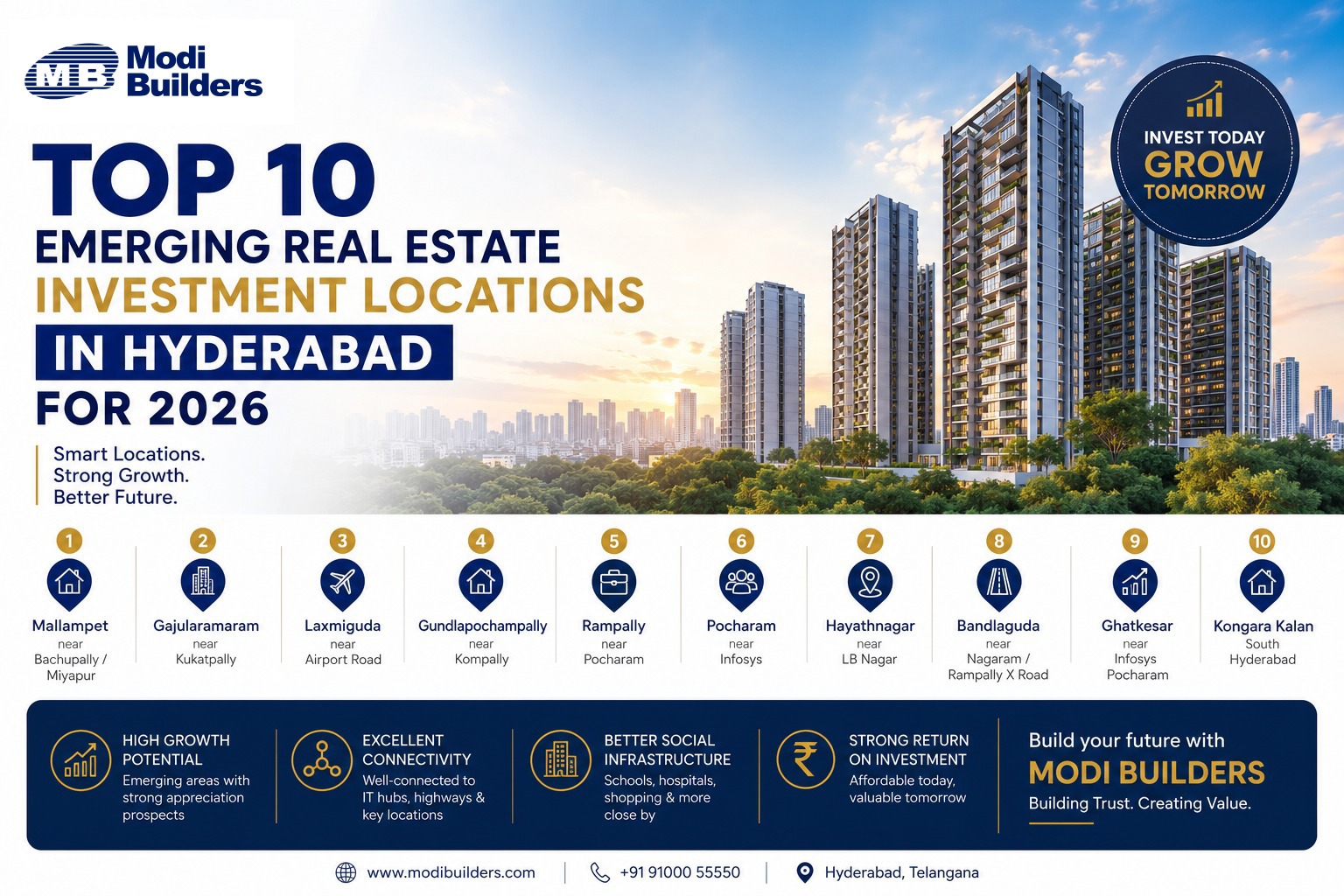
Mallampet, Gajularamaram, Laxmiguda, Gundlapochampally, Rampally, Pocharam, Hayathnagar, Bandlaguda, Ghatkesar, Kongara Kalan these aren’t household names the way Gachibowli or Kondapur are. But that’s part of the point. They’re locations where buyers can still enter at reasonable prices, where infrastructure is improving visibly, and where a well-planned community project has room to appreciate rather than starting from an already-elevated base.
The combination of improving connectivity, employment-driven demand from nearby corridors, and the gated community product’s suitability for the buyer profiles in these areas creates a reasonably compelling case for long-term positioning.
On Choosing a Builder – More Important Than the Brochure Suggests
Here’s where I’d push back against the tendency to focus entirely on the project and the location. The builder matters enormously, in ways that don’t always show up during the buying process but become very apparent after possession.
Quality of construction. Whether the amenities that were promised actually get built and maintained. Legal compliance and RERA registration. Timely delivery. How the maintenance association gets set up and whether it actually functions. Customer responsiveness when things go wrong and things always go wrong somewhere, in every project.
A good location with a poor builder is a frustrating experience. A slightly less prime location with a builder who delivers well is often the better outcome over a five-year horizon.
Modi Builders has been operating in Hyderabad for over three decades, with projects across the emerging corridors mentioned above Mallampet, Gajularamaram, Pocharam, Ghatkesar, and others. Three decades of delivery history in one city is worth something, because you can actually look at what they built previously and whether residents are satisfied. That kind of track record is harder to fake than a glossy render.
The Honest Bottom Line
Buying a home is genuinely complicated financially, emotionally, and logistically. Anyone who tells you it’s straightforward hasn’t done it recently.
But the underlying case for gated communities living in Hyderabad’s growing corridors is, I think, fairly clear. The product matches what buyers actually want right now. The locations have demand fundamentals that are employment-driven rather than speculative. Infrastructure is improving in ways that are visible and ongoing. And professional developers with real track records are building in these areas.
That’s not a guarantee of anything. Real estate never is. But it’s a more solid foundation than most markets offer, and from what I can tell Hyderabad keeps making that case quietly, year after year, without needing to shout about it.
FAQs
1. What are the benefits of living in a gated community in Hyderabad?
Gated communities offer enhanced security, modern amenities, landscaped open spaces, professional maintenance, and a comfortable lifestyle, making them an ideal choice for families and working professionals.
2. Why are gated community apartments popular in Hyderabad?
With Hyderabad’s rapid urban development, homebuyers prefer gated communities for their safety, premium amenities, better infrastructure, and strong long-term investment potential.
3. Are gated community apartments a good investment?
Yes. Gated community apartments generally attract higher demand from both buyers and tenants due to their quality infrastructure, lifestyle amenities, and well-maintained surroundings, making them a strong long-term investment option.
4. What amenities are commonly available in gated communities?
Most gated communities include a clubhouse, swimming pool, gym, children’s play area, landscaped gardens, jogging tracks, indoor games, sports courts, multipurpose halls, and 24/7 security.
5. Are gated communities suitable for families with children?
Yes. Gated communities provide a secure environment with dedicated play areas, parks, walking paths, and recreational spaces, allowing children to enjoy outdoor activities safely.
6. Which locations in Hyderabad are ideal for gated community living?
Popular locations include Mallampet, Gajularamaram, Laxmiguda, Gundlapochampally, Rampally, Pocharam, Hayathnagar, Bandlaguda, Ghatkesar, and Kongara Kalan, all of which are experiencing strong residential growth.
7. How do gated communities improve lifestyle?
Gated communities promote a balanced lifestyle by offering fitness facilities, green spaces, community events, recreational amenities, and professional maintenance, creating a comfortable living environment for residents.
8. Why choose Modi Builders for a gated community apartment in Hyderabad?
Modi Builders has over three decades of experience in developing quality residential communities across Hyderabad. Its projects are strategically located, thoughtfully planned, and designed to provide modern amenities, reliable construction, and lasting value for homeowners and investors.




Sorry, the comment form is closed at this time.